How to Safely Remove Hard Water Stains From a Quartz Countertop
12/12/2025
6 min read
6 min read
First introduced in the 1960s, quartz countertops continue to be a popular option for both commercial and residential projects thanks to their stain resistance.
But even though quartz is a nonporous material that resists staining, it isn’t completely stainproof. Like any surface, quartz can still be vulnerable to marks, including water stains. If left unaddressed, these stains can lead to more serious damage over time. That’s why it’s important to remove hard water stains and calcium buildup as soon as they appear.
Here’s how to maintain the beauty of your quartz countertops by removing hard water stains — along with some practical tips for general maintenance.
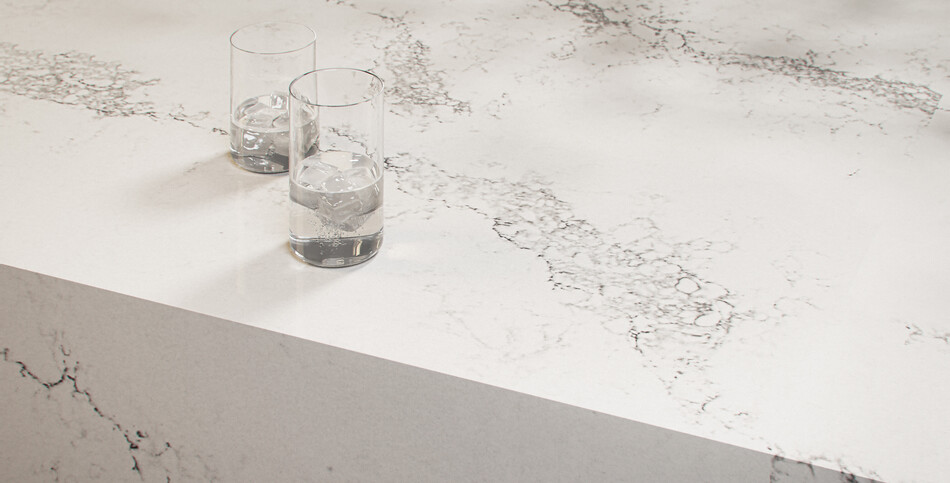
Quartz is stain resistant — not stainproof — which means the wrong substances left on the material can leave marks. A hard water stain is a cloudy, chalky, or whitish deposit left behind when water with a high mineral content, especially calcium and magnesium, dries on a surface. When hard water evaporates, it leaves those minerals behind, creating spots or filmy buildup that can merge with the quartz. As it accumulates, the stain becomes more visible and damages the aesthetic of the material. However, even if you don’t live in places known for hard water, such as Phoenix or Minneapolis, your quartz countertops are still susceptible to staining.
To avoid hard water stains completely, clean any spills as soon as they happen, which will help prevent the stain from settling into the pores of the quartz. To remove water stains countertops safely and effectively:
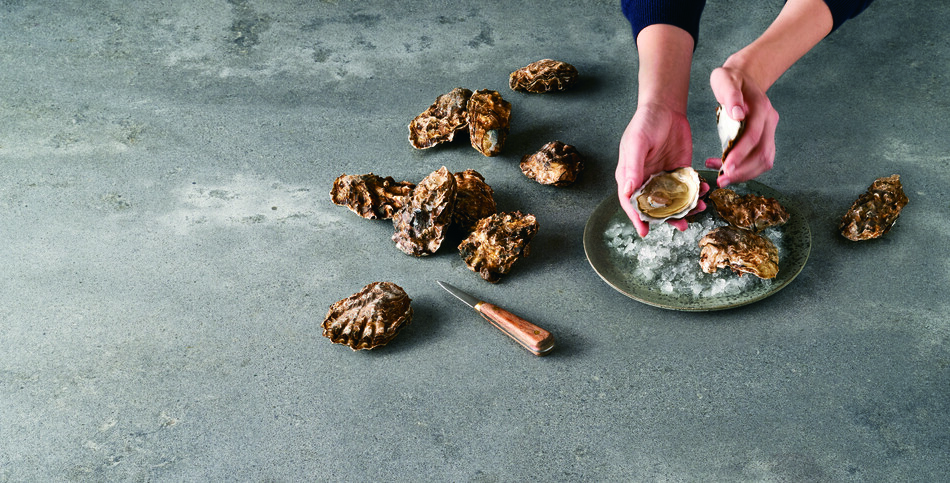
Even darker color tones, such as 4033 Rugged Concrete, require light cleaning daily, as certain marks, such as fingerprints, can become noticeable.
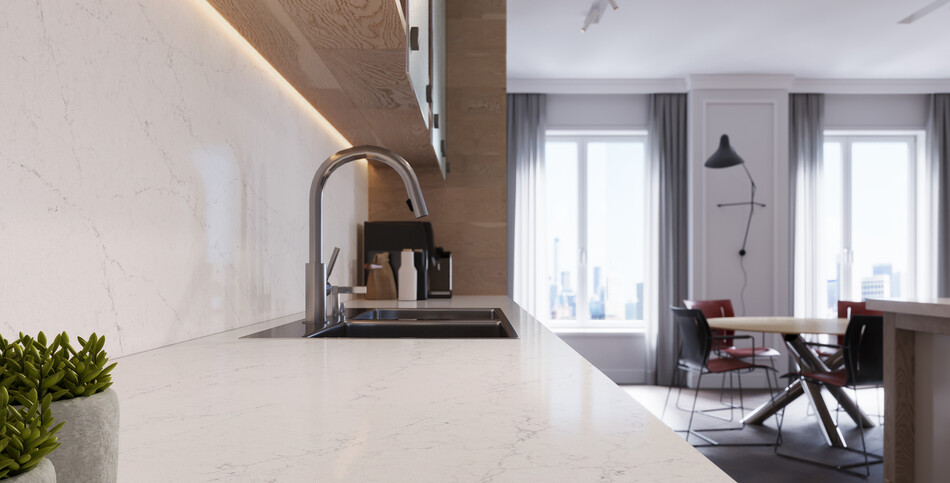
To ensure that an installed quartz countertop remains in good condition, it’s important to be aware of how to perform proper maintenance. There are several do’s and don’ts when it comes to keeping quartz countertops in good condition and avoiding stains and damage.
The bottom line is quartz is a beautiful option for kitchen countertops, whether for residential or commercial use. See how easily the material resists stains by ordering a sample.
Yes, as long as you use it in moderation and after it has been diluted with water. While harsh chemicals should be avoided, a solution of half white vinegar and half water is often effective at dissolving the mineral deposits in hard water stains (limescale). Apply the diluted solution using a soft cloth and leave it on the area for a few minutes. Always rinse the area thoroughly with clean water immediately afterward and dry it completely to prevent dulling the surface.
No. You must strictly avoid using bleach, ammonia, strong acids, or solvents (such as paint thinner or permanent markers) directly on quartz. These harsh chemicals can damage the polymer resins in the engineered stone, leading to discoloration, etching, or a permanent dulling of the surface luster.
The best prevention is to wipe and dry your countertops immediately after any water exposure. Do not allow water to sit, especially in areas with hard water. Keep a soft, clean towel or microfiber cloth nearby and make a habit of drying the sink area and any areas around the faucet after use.
No. You should never use abrasive tools such as scouring pads, steel wool, or heavy-duty scrub sponges (including the abrasive side of a standard kitchen sponge). These can dull the finish or cause fine scratches, especially on polished quartz surfaces. Only use soft, nonabrasive cloths, paper towels, or gentle scrubbing pads recommended for nonstick cookware.
{{ subtitle }}
{{ i.desc }}
{{ subtitle }}
{{ subtitle }}