Gray Quartz Countertops - Light- and Dark-Gray Ideas
12/11/2025
9 min read
9 min read
Gray countertops are a fantastic neutral option. Depending on the mood you want to set, Caesarstone offers several sophisticated grays in many different tones, including solid, light, and dark-gray.
Whether you prefer a sleek appearance or a more rugged look, you’ll find a design that speaks to you among the gray countertops. Alongside our guide to gray countertops, you’ll find tips for incorporating gray’s various tones into your kitchen successfully.
Gray is often seen as a sophisticated and grounding color that promotes neutrality and balance. Not black, but not white, gray is impartial and diplomatic. It serves as a perfect backdrop that shines a spotlight on other colors and design elements.
Gray also is strongly associated with refinement, class, and timelessness. Darker, charcoal grays often convey luxury, while lighter, silvery grays feel modern and sleek.
As it lacks vivid color energy, gray is often linked to professionalism, maturity, wisdom, and dependability. It creates a sense of composure and solidness.
Gray is a powerful modifier. It is rarely used alone but is foundational in a successful color palette because of its ability to:
Granite used to be the most popular of all countertop materials, particularly for gray surfaces. But the material has weaknesses, including how porous it is, which makes stains commonplace and maintenance costly. You also have a limited range of colors and patterns with granite.
Engineered stone overcomes both of these challenges, which is partially why it has become a more popular material for gray countertops (and surfaces of any hue, for that matter). Engineered stone offers:
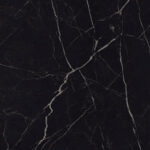
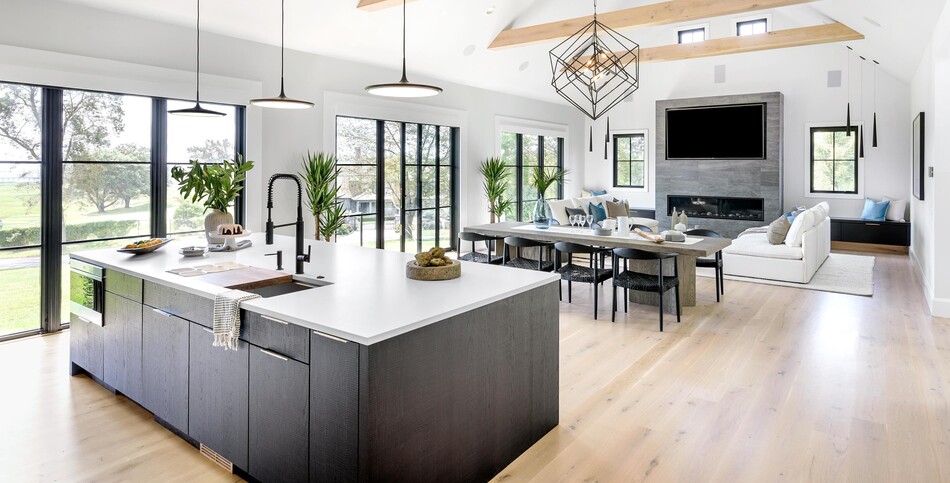
Dark-gray quartz countertops — such as Rugged Concrete, Sleek Concrete, and Raw Concrete — work especially well if you’re going for an industrial look in your kitchen. Dark-gray quartz provides an edgy contrast to the inherent warmth of wood cabinets and flooring for a well-balanced, intriguing aesthetic.

However, gray countertops aren’t pigeonholed solely into contemporary industrial design. Dark-gray countertops are surprisingly diverse with their ability to complement a wide range of colors and décor themes.
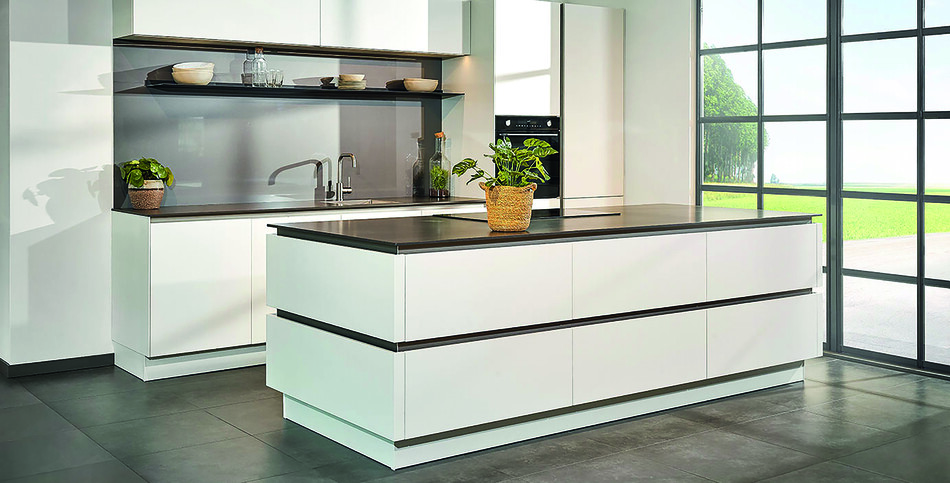
For example, gray quartz pairs wonderfully with white cabinets to provide contrast without going overboard, as one might with solid black countertops. When dark-gray countertops are added to a kitchen with an overall darker color scheme, they provide new depth and texture for an overall nuanced aesthetic.
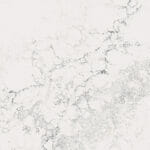
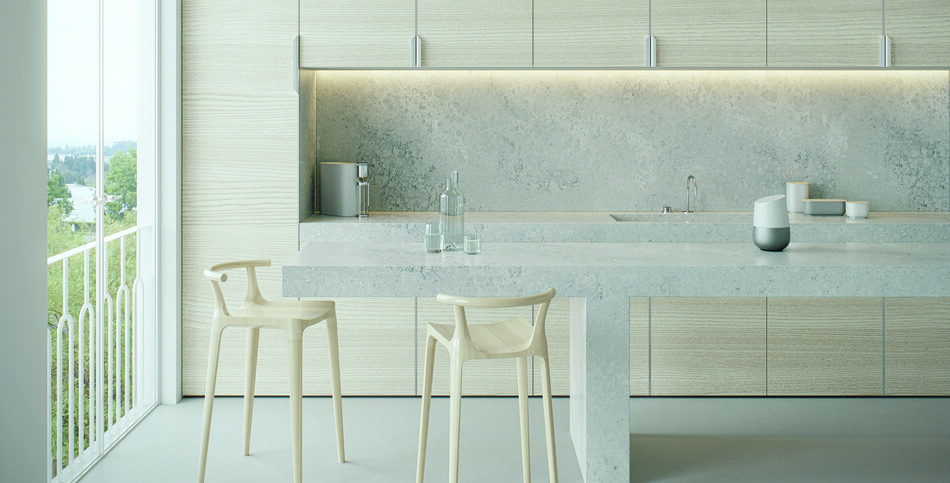
If you’re looking for something a bit stylish, light-gray quartz countertops might just do the trick. Even within this subset of gray, you have a wide range of choices.
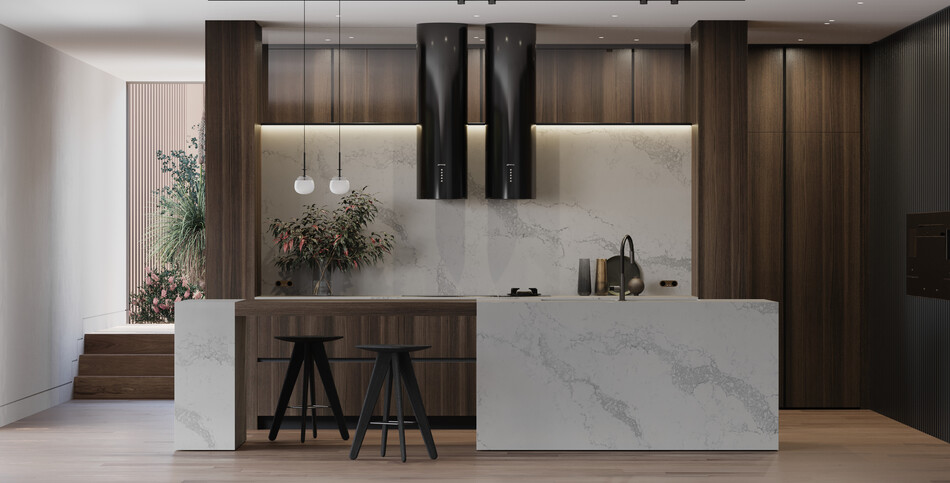
Caesarstone’s Statuario Maximus offers an intriguing texture and is the quintessential light-gray quartz countertop, while Fresh Concrete is a slightly less obvious choice. It still contains shades of gray but the surface’s true power lies in its ability to enhance the overall feeling of a gray kitchen.
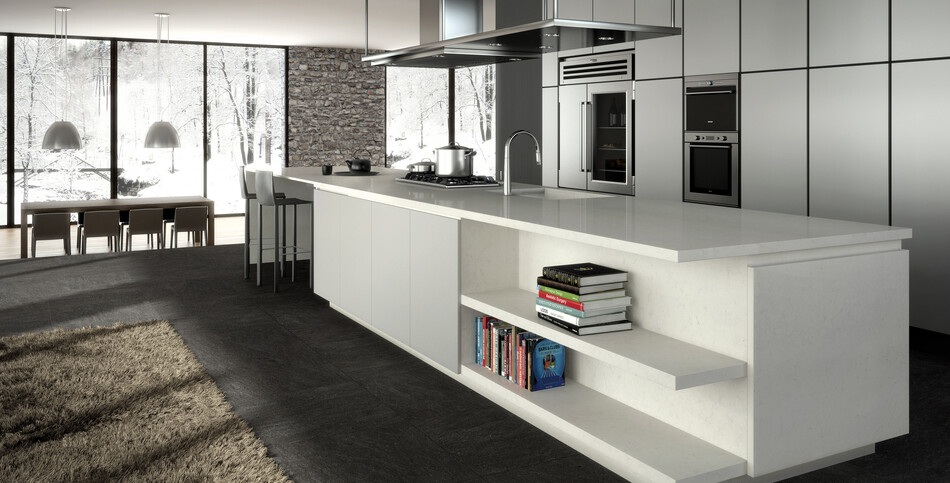
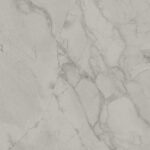
If you’d like more of a classic, marble-style look, consider London Grey. This light-gray countertop complements white cabinets by providing a subtle contrast that enhances the room’s brightness while maintaining a soft, cohesive look. When paired with natural wood or dark colors, the juxtaposition is visually striking.
While gray quartz countertops are a classic choice, Caesarstone is investing in innovative, high-performance materials. For those exploring quartz alternatives, we offer sophisticated gray surfaces in both our advanced fusion Caesarstone ICON and porcelain materials.
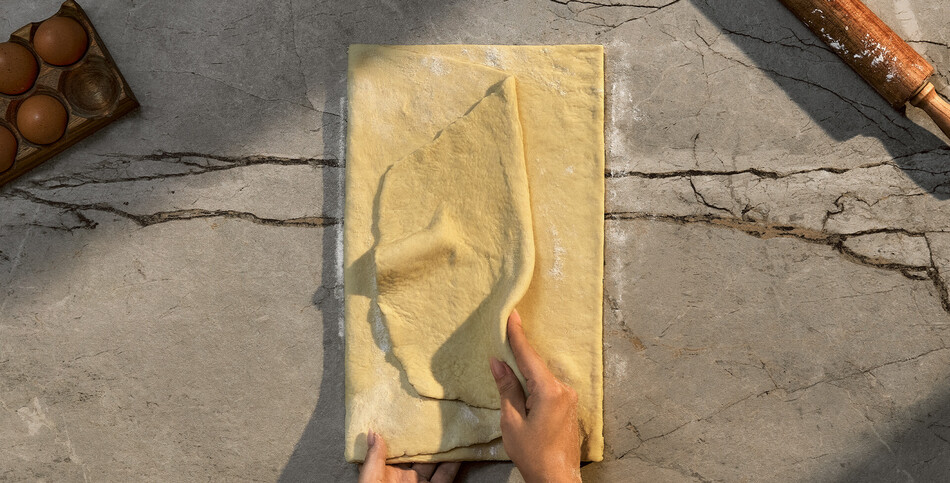
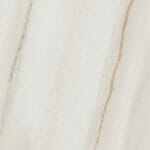
Porcelain surfaces are rapidly gaining momentum in the U.S. for both residential and commercial applications. Caesarstone’s collection offers designers more options than ever, featuring ultra-resilient, easy-to-maintain surfaces with elevated, stone-inspired aesthetics that meet the demands of modern living. You can find the perfect shade of gray in porcelain, such as Transcenda or Striata.
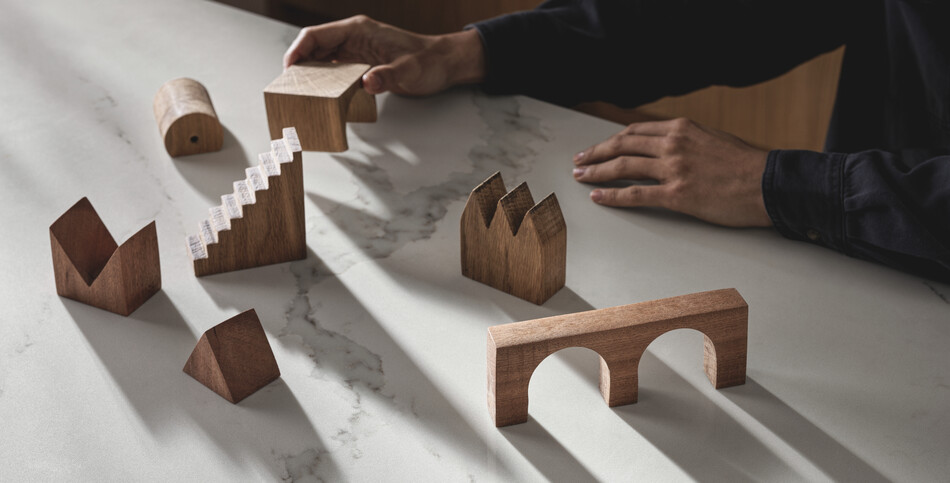
Alternatively, the Caesarstone ICON Collection features advanced fusion surfaces. These unique, patent-pending surfaces are made from a blend of up to 80% recycled materials, including high-quality, postindustrial recycled glass. Best of all, these beautiful surfaces are crystalline silica-free* and deliver striking depth in shades of gray, such as Brillianza, Calacatta Nobella, and Turbine Grey.
Now that you have a few ideas for both light- and dark-gray countertops, let’s explore some tips for selecting the right hue and model.
Gray kitchen countertops that are made from durable porcelain, sustainable Caesarstone ICON, or classic quartz are incredibly flexible from a design standpoint. As such, don’t be afraid to get creative with the end result. Creative countertop edge types such as waterfall countertops can look stunning in a modern space, as can even more adventurous designs.
While contemporary design embraces all variations of gray, those that are particularly light or dark are most associated with modern styles. Not only do they enable dramatic contrasts, but their subtle deviation from the earthier tones found in nature also gives spaces a uniquely contemporary and intentionally designed appeal.
Mid-level gray countertops offer a grounded presence in kitchen design. Their soft, earthy undertones evoke a sense of comfort and approachability, making them especially fitting for farmhouse or transitional kitchens. They are the perfect counterpoint to natural wood elements and textured finishes, creating a quiet, harmonious contrast.
Much of a gray countertop’s character comes from subtle undertones that shift a shade toward warm or cool. Warm grays, often tinged with hints of beige or taupe, lend a cozy and inviting atmosphere that pairs beautifully with wood, brass hardware, and rustic décor. By contrast, cool grays, which may have blue or green undertones, deliver a crisp, contemporary vibe that complements sleek finishes, stainless steel, and minimalist spaces.
When selecting gray countertops — regardless of whether you choose quartz, Caesarstone ICON, porcelain, or natural stone — pay close attention to these underlying tones. The right undertone can tie together your kitchen’s color palette and accentuate your desired mood.
While Caesarstone countertops don’t require as much maintenance as a material such as granite, you still need to take care of them. Finishes such as our Concrete, Honed, and Rough products require more care than our Polished products.
It’s still not too stringent, mind you. You’ll just need to clean the surface with Soft Scrub Liquid Gel containing bleach weekly. If you’d rather not deal with that extra task, consider our Polished finish for your gray surface.
To give you an idea of how versatile this hue can be, let’s take a look at two examples of a white kitchen with gray countertops. In a classic space, kitchen island countertops made from Piatra Grey quartz provide stunning contrast, especially when you pair them with a white backsplash.
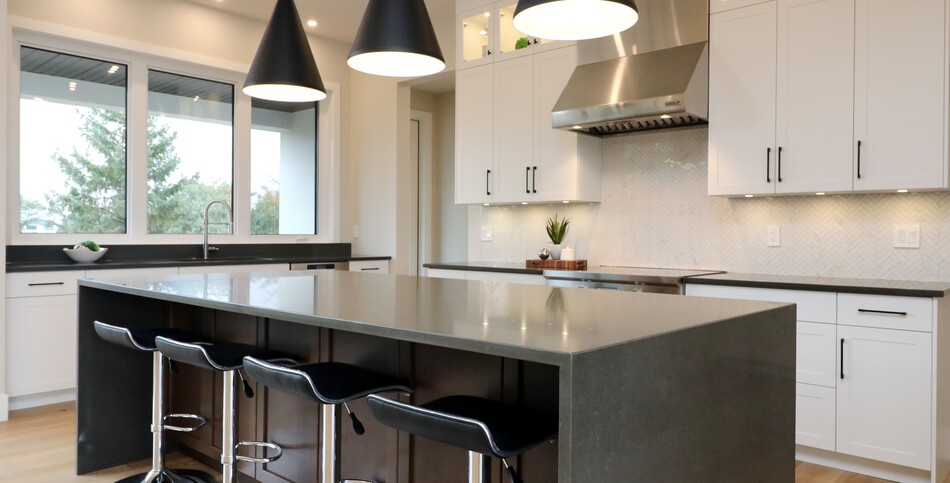
Also made from quartz, Airy Concrete provides the texture, contrast, and grounded feeling that brings life to an otherwise bright, neutral, and minimalist white kitchen.
The gray offers a necessary visual weight in the light space. It’s dark enough to contrast sharply with the white walls and floor but light enough to keep the overall atmosphere feeling airy and open.
Colors can be deceiving on-screen. That’s especially true for more nuanced shades and patterns of gray. Visiting one of our Caesarstone locations can ensure you know how the surface looks in person.
For a quicker, virtual option, explore our user-friendly visualization tools to help you choose the perfect surface for your project.
We also recommend that you experience the surface firsthand to ensure it’s the right fit for your space. You can request a sample to observe how the color interacts with the light in your kitchen. Make sure you also get samples of your flooring, cabinetry, and backsplash if those aren’t already installed.
Gray is such a versatile and neutral color that it works well with virtually any wall color. What will influence your wall color decision most is the overall aesthetic you’re going for. If you want to create a lighter kitchen (common among those trying to make a small space feel larger), it’s hard to go wrong with white walls. For a darker space, black or burgundy works well. If you want to create a modern space, you can even consider bolder colors such as blue.
Wood flooring is a classic choice that looks beautiful alongside gray quartz surfaces. You can choose a lighter or darker hue based on the tone of the quartz surface you’ve chosen.
One popular choice is to pair gray countertops resembling granite with a neutral-colored tile backsplash. The tile’s uniform nature complements the less uniform veining of quartz surfaces.
When choosing a gray surface for this color combination, you’d be wise to avoid a hue resembling that of your flooring. Go either darker or lighter to maintain enough visual separation between the two.
*May contain trace amounts of crystalline silica up to 1%.
{{ subtitle }}
{{ i.desc }}
{{ subtitle }}
{{ subtitle }}