Understanding the Different Grades of Quartz
12/11/2025
6 min read
6 min read
When choosing a new countertop, vanity, or kitchen island, the decision often seems to come down to style and price. But the real secret to a long-lasting and worthwhile investment is understanding how a quartz slab is graded.
Quartz grades — sometimes referred to as levels — are determined by three key factors:
A better grade ensures your surface stands the test of time, influencing its cost, durability, and beauty no matter where you use the material.
To help you make a smart, informed choice, let’s review the three distinct grades of quartz, how the grades mimic the look of natural stone, the telltale signs of the quartz’s grade, and more.
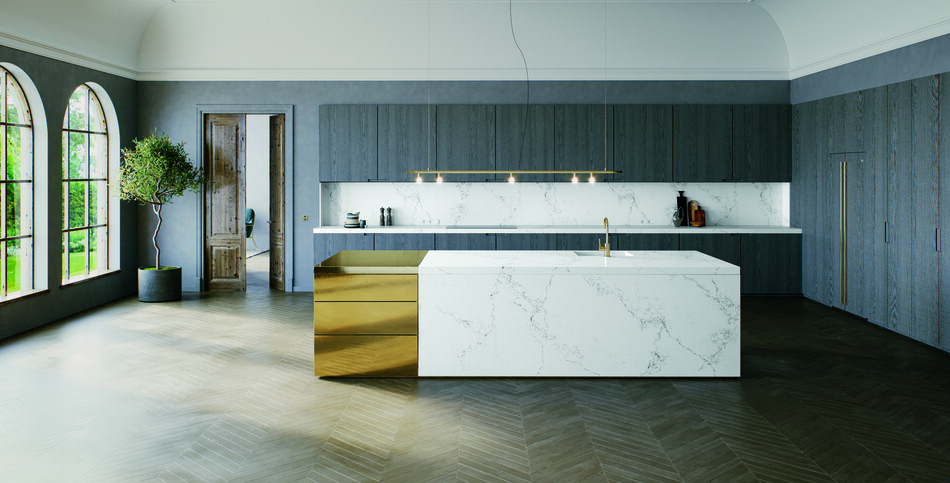
The three grades of quartz are first choice, commercial grade, and second choice, which are also referred to as Levels 3, 2, and 1, respectively. Each grade influences cost, durability, and beauty, as well as the overall value of the home.
| Quartz Grade | Price Range (per sq. ft.) | Resin Content | Key Characteristics |
|---|---|---|---|
| First choice | $90 to $200+ | 7% to 8% | Pristine condition, rich and brilliant colors, distinct gleam, virtually flawless. |
| Commercial grade | $75 to $110 | 8% to 11% | Best price-to-quality ratio. Suitable for high-traffic use (hotels, cafes, etc.). Hard to spot defects. |
| Second choice | $50 to $95 | 12%+ | Basic, construction-grade. Duller finish, often used in prefabricated models. |
The percentage of resin is a primary indicator of quality in quartz. The lower the resin content, the harder, more concentrated the stone surface. The harder the stone, the better the material’s long-term durability and scratch resistance.
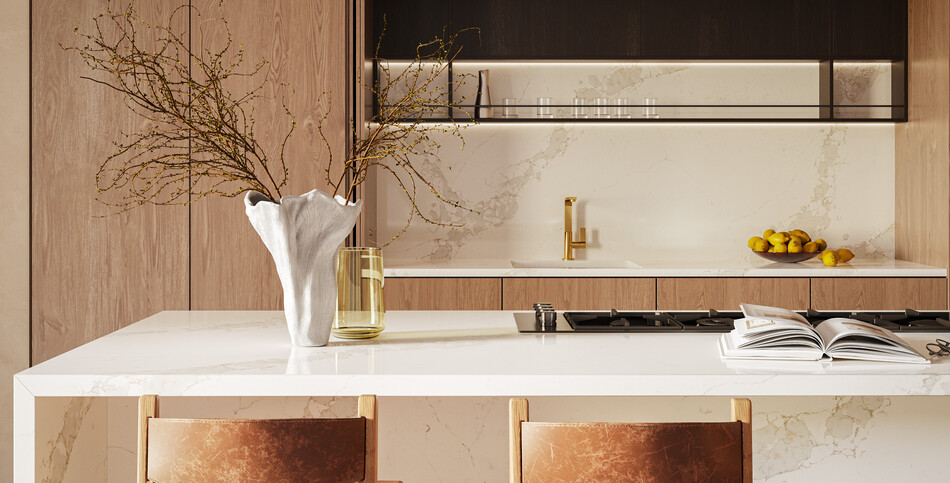
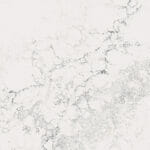
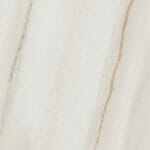
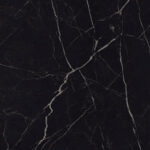
The most significant visual difference between quartz grades is their ability to convincingly mimic the look of natural stone such as marble or granite.
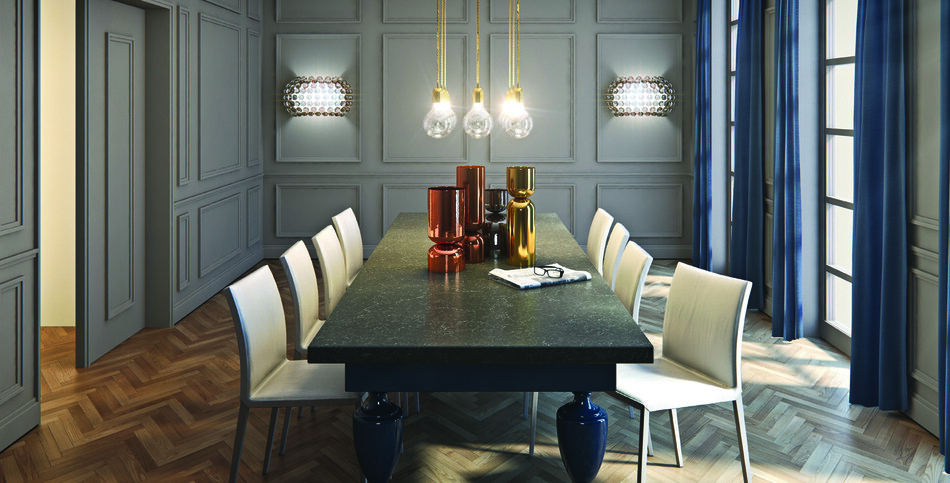
To ensure you get the quality you’re paying for, there are several telltale signs that can help distinguish the quality of a quartz slab.
The base color, or hue, must be consistent both within a single slab and across multiple slabs if needed for a large kitchen. While veining naturally varies on purpose, the overall color foundation should be uniform to produce a cohesive look. Manufacturers using less precise engineering may struggle to maintain this standard, resulting in jarring color variations or a blotchy sheen on the surface.
Aggregate refers to the crushed material (such as quartz crystals) that forms the patterns. This material must be equally distributed throughout the slab. Look for flaws such as pits, pockets, or imbalances in weight and density. These imperfections increase fragility and are visible indicators of a low-quality product. A quick visual check will confirm if the slab is uniform in thickness and crystalline texture.
When viewed at eye level, the quartz’s finish — whether Polished, Honed, or Rough — should be smooth and uniform. A blotchy or uneven sheen can indicate either a substandard resin quality or inexperienced surface polishing. Always inspect the slab in person before committing to a purchase; never order solely from a catalog.

Quartz is a fantastic, versatile material that is highly suitable for kitchens, bathrooms, and more. Although the initial cost of Level 3 versus Level 1 quartz is higher, it often translates to better long-term value. It offers superior durability and retains its aesthetic appeal for decades.
Choosing a quality manufacturer with a strong track record, such as Caesarstone, and working with a well-known fabricator (who has the skill and foresight to properly lay and seam comparable slab parts) is the best way to avoid low-grade quartz and guarantee your countertops offer lasting beauty and value.
Ready to select the perfect quartz grade for your space? Order a sample today to see the quality difference for yourself.
Yes, the grade of quartz can absolutely affect the warranty. Caesarstone offers lifetime warranties because we stand behind our low-resin, high-quality material. Lower-grade (second choice) or prefabricated slabs may come with limited warranties, or no warranty at all, due to their higher risk of chipping, discoloration, or premature wear.
The primary way to distinguish them is by looking for natural realism and finish quality. First choice quartz achieves a virtually flawless, pristine finish with complex, full-body veining that mimics natural stone. Commercial-grade quartz offers the best performance-to-price ratio but may have slightly less depth, a higher resin percentage, and fewer unique patterns.
Yes, lower-grade quartz is generally more susceptible to damage. Because second choice quartz contains a higher percentage of polymer resin (upward of 12%), it is softer and more prone to scratching. The higher resin content can also make the surface less heat tolerant and more vulnerable to staining or dulling over time compared to premium slabs.
Not always, but often. Prefabricated quartz countertops frequently use second choice or construction-grade quartz. These units are cut to standard sizes and may lack the consistent body color, intricate veining, and high-quality finish found in a first choice slab, which is custom-cut from a full slab. Always inspect the material quality, regardless of whether it is prefabricated or a full slab.
{{ subtitle }}
{{ i.desc }}
{{ subtitle }}
{{ subtitle }}