When you choose surfaces for your design projects, you make decisions that you’ll likely live with long-term. That’s why the questions of what the countertops, flooring, and wall coverings are made of, and how they’re made, matters. You need to know what goes in and where they come from not only out of concern for the planet, but also for the quality, performance, and integrity of what ends up in the spaces you create, whether residential or commercial, inside or out.
Caesarstone has led in innovation of premium surfaces for more than 37 years. Long before sustainability entered the design conversation, we were operating with practices and technologies that reduced our environmental footprint, reused what we could, and pushed toward a cleaner way to manufacture countertops and, eventually, multi-material, multi-application solutions.
Here’s a look at our sustainable practices.
What Goes In: Recycled Materials and Zero Waste to Landfill
Caesarstone’s core approaches to manufacturing are to
– use as much reclaimed and recycled material as possible,
– minimize what gets discarded, and
– engineer production processes in which waste becomes input rather than output.
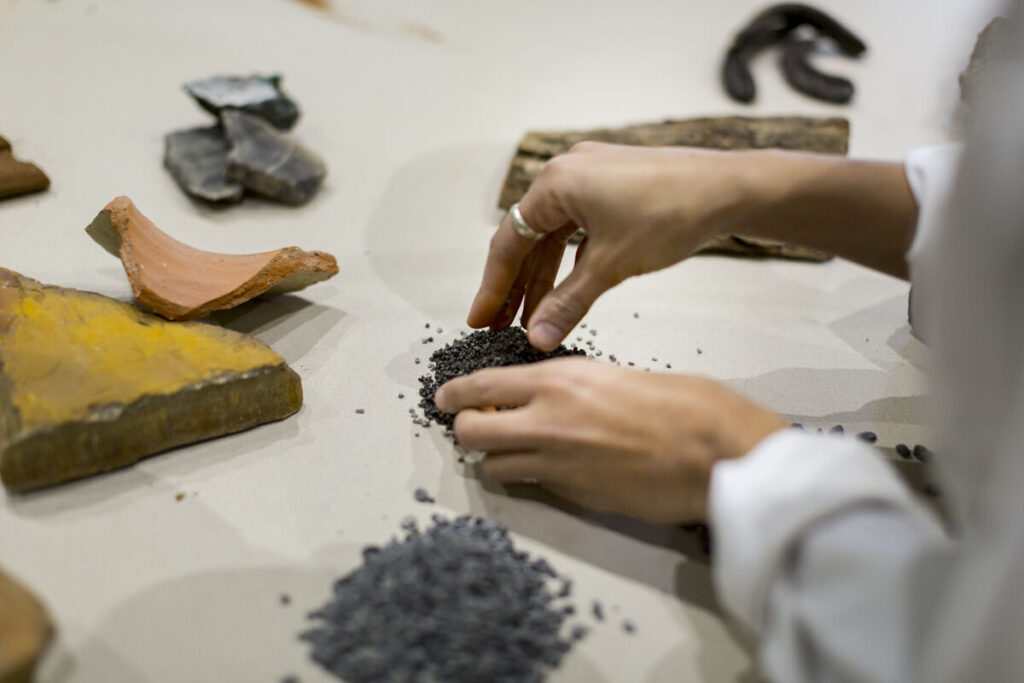
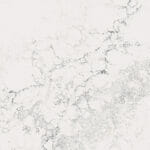
Our Caesarstone ICON™ surfaces are made with 85% recycled content, reflecting our commitment to responsible use of available materials and minimization of use of raw materials whenever possible. With our porcelain products, we reuse waste generated in our initial production working to close the loop internally with some of our porcelain slabs containing up to 20% recycled materials. That means the advanced fusion surfaces and porcelain panels specified for you projects keep materials out of landfills and in use for the creation of beautiful, superior performance surfaces that are warrantied to last (see details of product warranties here and here).
In production, we’ve achieved 100% material recycling and reuse. That means zero waste goes to landfill from the plant itself. Scraps, offcuts, and process waste are reintegrated into the production cycle rather than discarded. It’s a closed-loop approach that treats gives every piece of material ongoing, practical purpose and value.
How We Use Water: 100% Wastewater Reuse
Surface manufacturing is a water-intensive process. Cutting, grinding, and polishing operations require significant water use, and many companies take a conventional approach by treating and discharging water as waste. Caesarstone does it differently.
100% of production wastewater is captured, treated, and reused globally, across all facilities. The water we use continuously goes back into the manufacturing process rather than being discharged into the water supply.
For interior designers, specifiers, and homeowners who care about the full life cycle of what they specify, this is truly meaningful. For Caesarstone, it’s the right thing to do for the environment and the smart thing to do for business.
The Full Picture: Life Cycle Assessments and EPD Certifications
An Environmental Product Declaration (EPD) is a verified, third-party document that quantifies the environmental impact of a product across its full life cycle — from raw material extraction and manufacturing through transportation, use, and “end of life” of that product. For designers and architects specifying materials for projects, EPDs provide the data needed to make responsible choices with confidence.
Caesarstone currently has 71 EPD-certified designs across our portfolio. Each certification involves a detailed life cycle assessment (LCA) that measures carbon footprint, energy use, water consumption, and other environmental indicators. These aren’t self-reported figures; they’re independently verified.
For LEED-certified projects, green building programs, and clients who ask their designers to specify with environmental accountability in mind, our EPDs provide the documentation to back up the specifications, contribute to projects’ green requirements, and offer peace of mind for project integrity.
A New Category of Surface: Caesarstone ICON™ Advanced Fusion Surfaces
In 2025, Caesarstone introduced Caesarstone ICON, an entirely new category of advanced fusion surfaces that represents one of the most significant product innovations not only in the company’s history but in the surfaces industry at large.
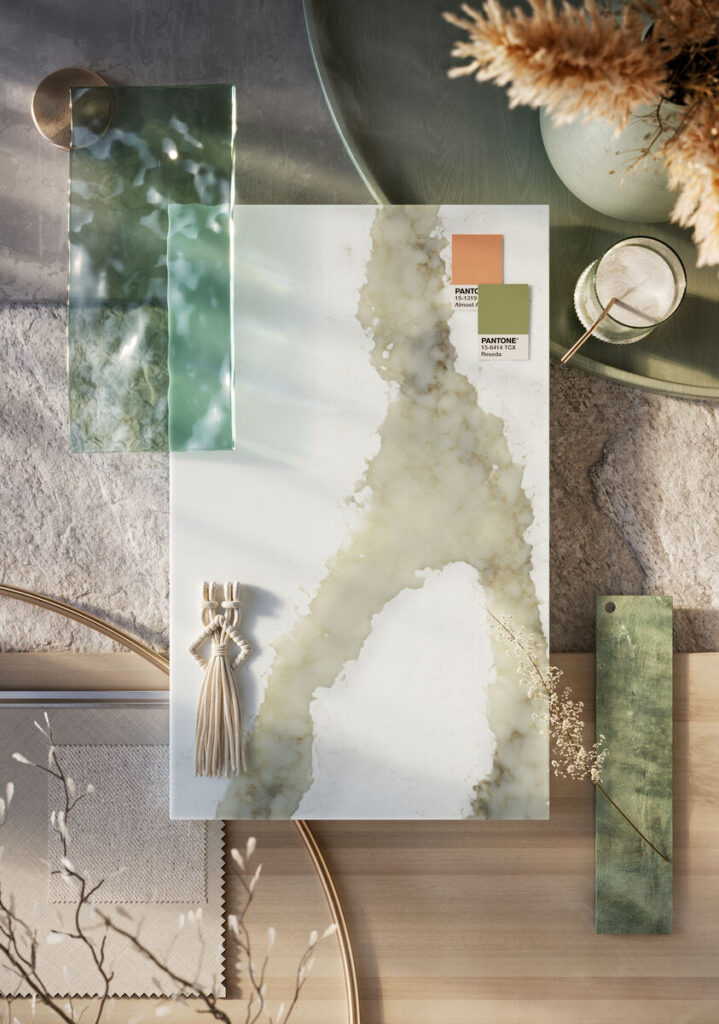
Caesarstone ICON is crystalline silica-free* and made with approximately 85% recycled materials — a patent-pending blend of glass-based and recycled components. We’re the first surface manufacturer to bring crystalline silica-free* products to market at this scale.
ICON surfaces carry a lifetime warranty and are available in an expanding range of colors that interpret marble, stone, and natural materials with remarkable depth and dimension.
*May contain traces of crystalline silica of up to 1%.
Caesarstone Porcelain: Beautiful, Durable, and Responsibly Made
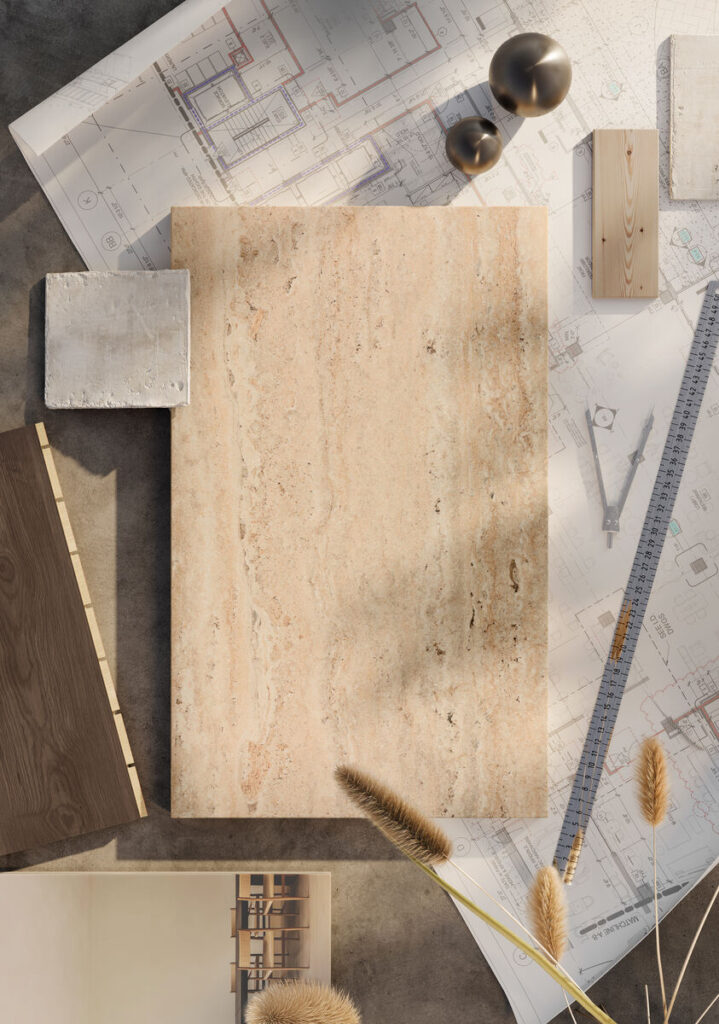
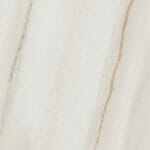
Caesarstone’s porcelain surfaces — available in 6mm, 12mm, and 20mm formats — are manufactured using the latest gauged porcelain tile panel (GPTP) technology. They’re produced from natural raw materials fired at extremely high temperatures, resulting in a nearly nonporous surface that resists moisture, stains, mold, and mildew without the need for sealing or chemical treatments over time.
The porcelain line represents a particularly strong sustainability profile within the Caesarstone catalog. The porcelain panels are designed for floors, walls, cabinet facings, and exterior applications, offering whole-room and whole-project surface design built to last decades without requiring replacement.
That durability is itself an environmental story. A surface that lasts a lifetime is a surface that doesn’t go to the landfill when trends change. Specifying for longevity is one of the most sustainable decisions an interior designer or homeowner can make, and Caesarstone Porcelain is engineered with exactly that in mind.
The Long View: 37+ Years of Doing Things the Right Way
Caesarstone invented the engineered quartz countertop more than 37 years ago. That history matters not just as a proof point for quality, but as context for our approach to sustainability. We didn’t add an ESG strategy when it became fashionable. We built operational practices — closed-loop manufacturing, water reuse systems, life cycle assessment programs — throughout decades of continuous improvement.
We operate as a trusted design partner within local U.S. markets, backed by the vast resources and sustainability commitments of our global company. The exceptional environmental standards behind Caesarstone’s surfaces are the same wherever they’re specified across the world — including in your city, here in the U.S.
Our latest ESG report encapsulates all the verified data about Caesarstone’s environmental progress, goals, and areas of ongoing investment. For a complete picture of where we stand and where we’re going, we invite you to take a look at our sustainability efforts.